Fernando Arrabal Terán (Melilla, 1933) has always considered himself an artist by paternal reference, being a painter and sculptor of objects in the purest pataphysical tradition. Despite this, he has also dedicated his career to other professions such as writer, poet or avant-garde and iconoclastic filmmaker.
He began his law studies in Madrid. In 1953, as a great theater lover, he was awarded the City of Barcelona Prize for his play “El triciclo“. Two years later he won a scholarship to Paris, where he has lived ever since. It was there that he met many of the leading figures of the 20th century, such as the French poet André Breton, Salvador Dalí and René Magritte, representatives of the purest Surrealism.
). Its authors suggest a baroque universe, precise, of a delirious and mathematical world; a mixture of opposites: of love and hate, tragedy and comedy, bad taste and aesthetic refinement, sacrilege and the sacred, the individual and the collective; the ceremonial ritual: in transcendental acts of life; the oneiric, and sometimes cruel and satirical vision of life, the unreason of the world; the repetition of things, sometimes time is conceived in a circular way. “The object”, Arrabal writes, “is not to discover what confusion is, but only what can be said about it”.
Sus autores sugieren un universo barroco, preciso, de un mundo delirante y matemático; una mezcla de contrarios: de amor y odio, tragedia y comedia, mal gusto y refinamiento estético, el sacrilegio y lo sagrado, lo individual y lo colectivo; el ritual ceremonial: en actos trascendentales de la vida; la visión onírica, y a veces cruel y satírica de la vida, la sinrazón del mundo; la repetición de las cosas, a veces se concibe el tiempo de manera circular. El objeto -escribe Arrabal- no es el de descubrir qué es la confusión, sino tan solo lo que se puede decir sobre ella.
As a poet, his titles stand out: “La piedra de la locura” (1984) and “Mis humildes paraísos” (1985). With “La dudosa luz del día” (1994), he won the XI Espasa Essay Prize.
For his polemic brilliance, within the best political writing, Carta al General Franco (1978) deserves a chapter. Thus, concluding with a brief cinematographic repertoire, works such as Viva la muerte (1970), L’arbre de Guernica (1975), Le cimetière des voitures (1981), El Emperador de Perú (1982), Adiós Babilonia (1983) reached the top. In all of them, the formal risk, the fleeting perspectives and the highest aesthetic goal trace a visual offer that does not belong to any school. Art of great effect, as opposed to pure speculation.
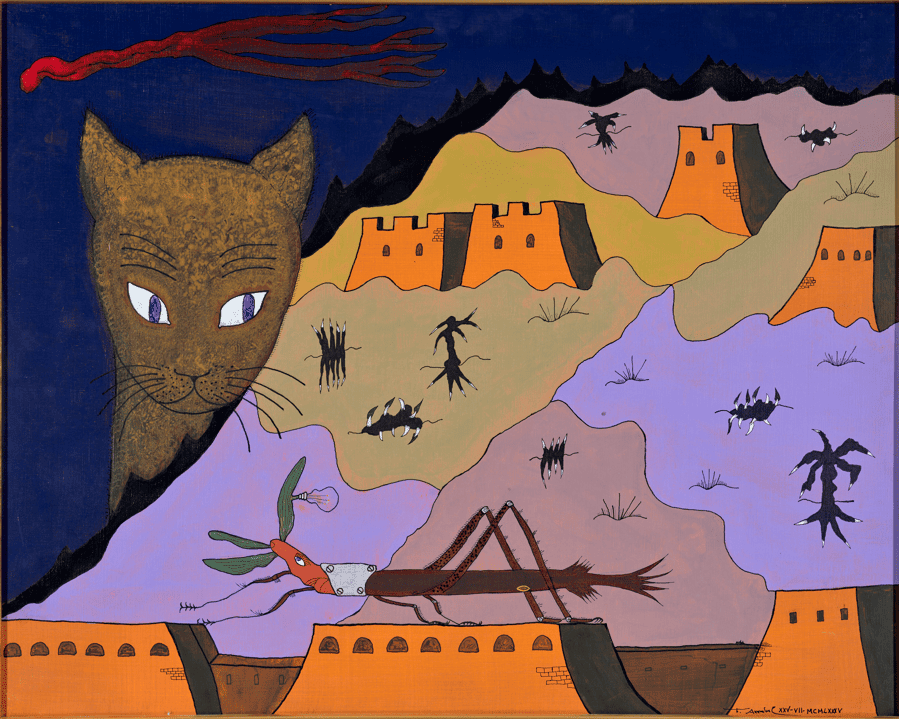
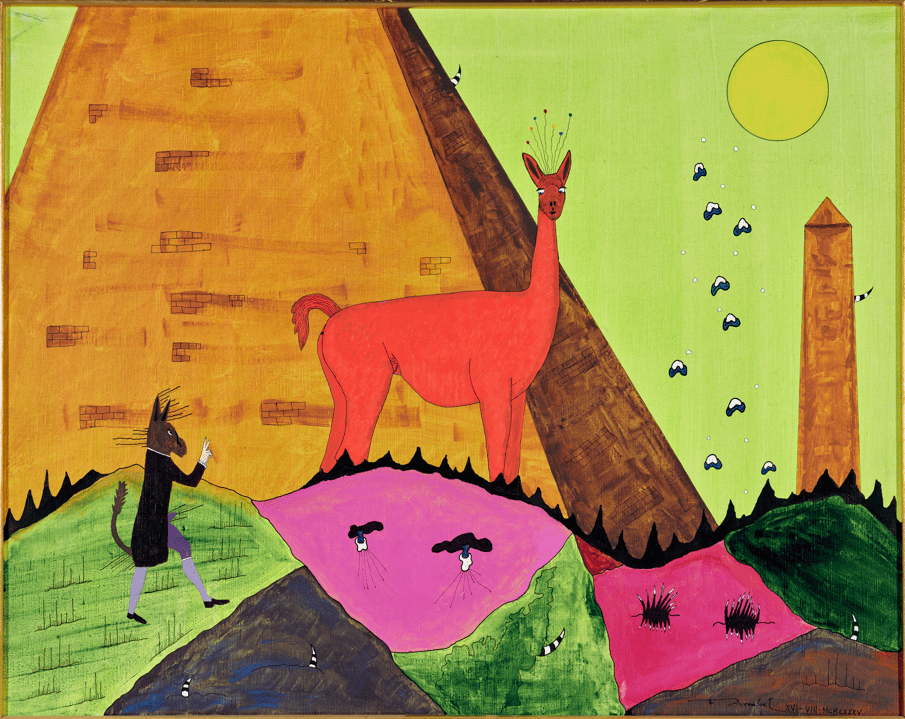
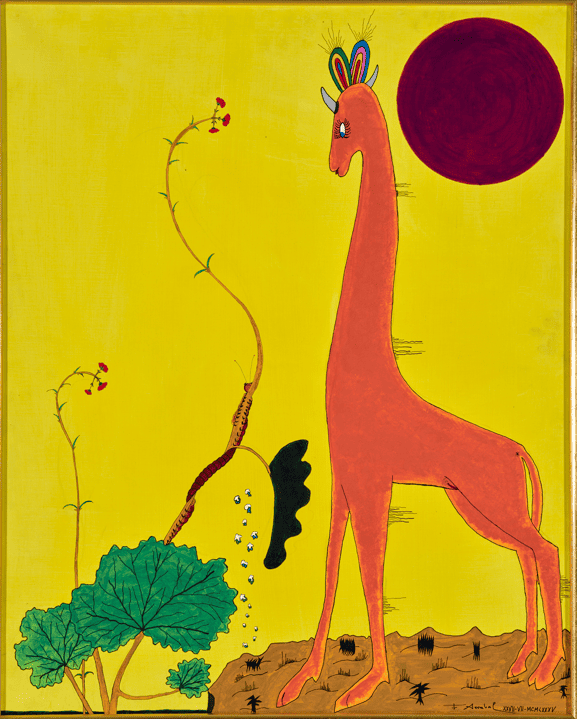
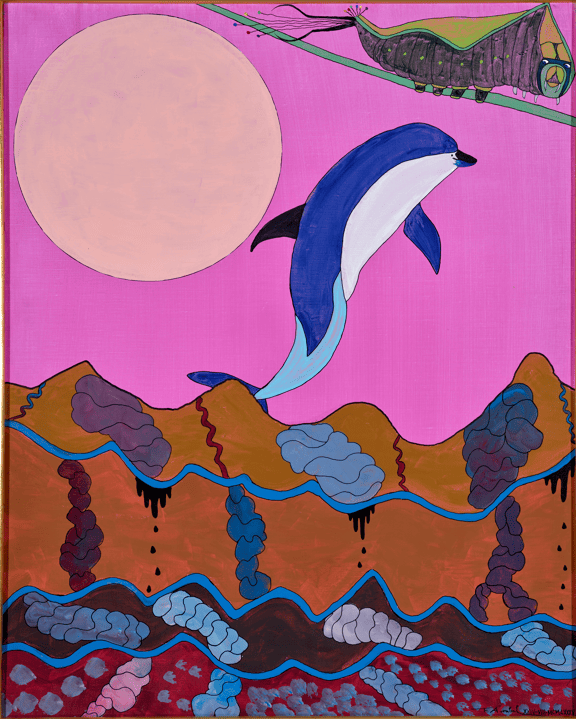
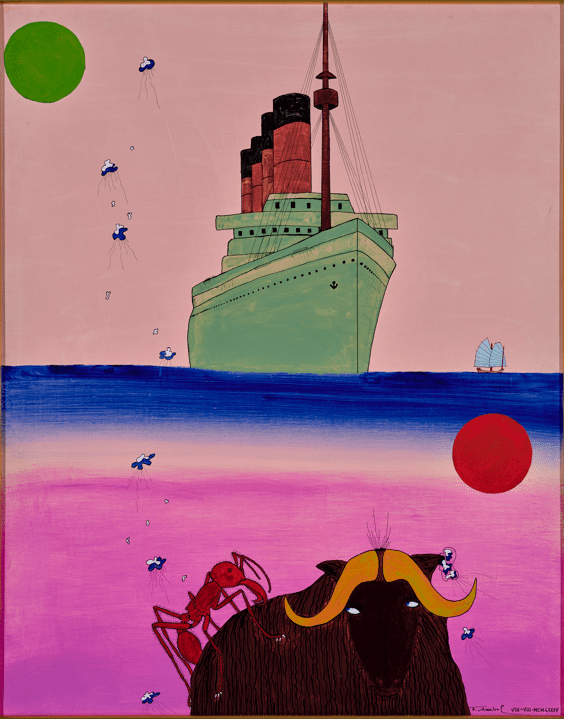
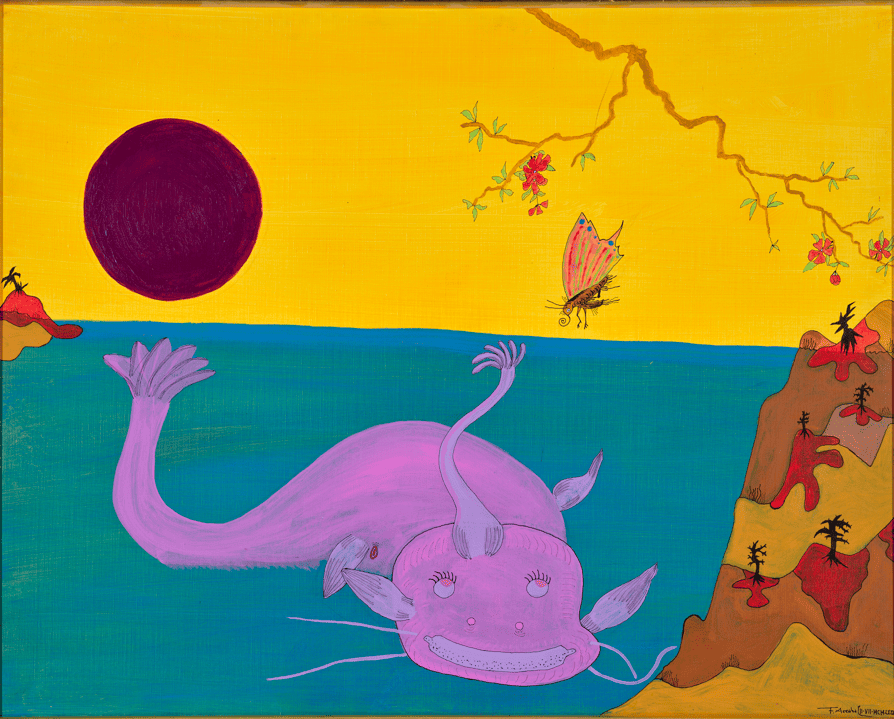
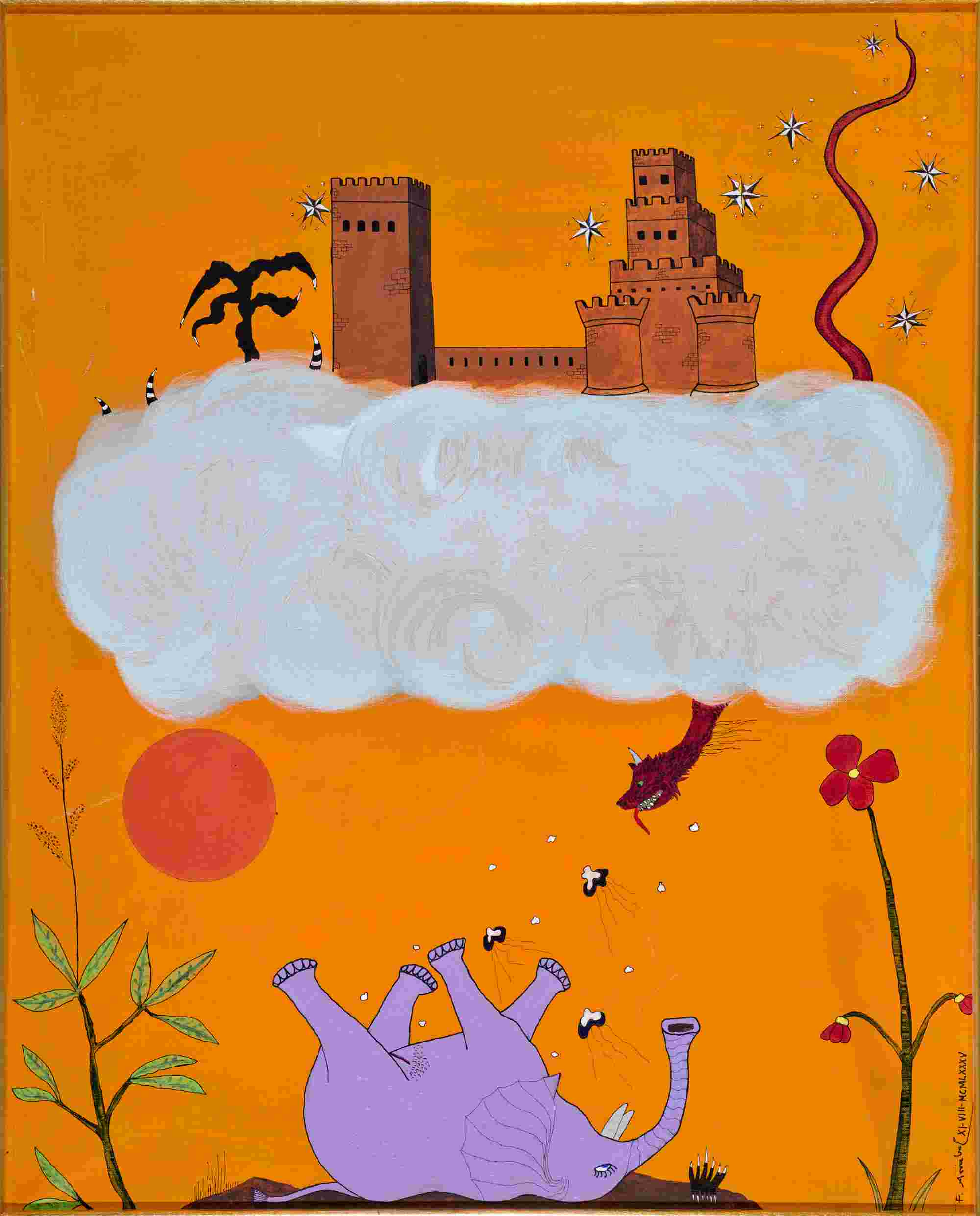
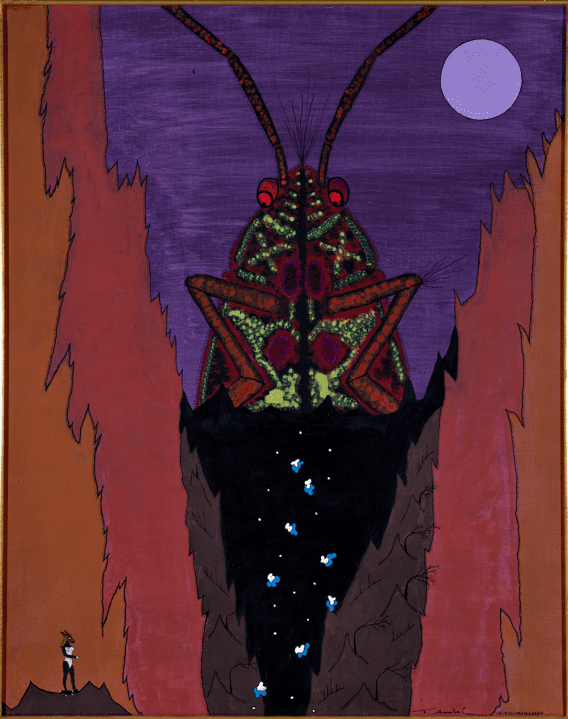
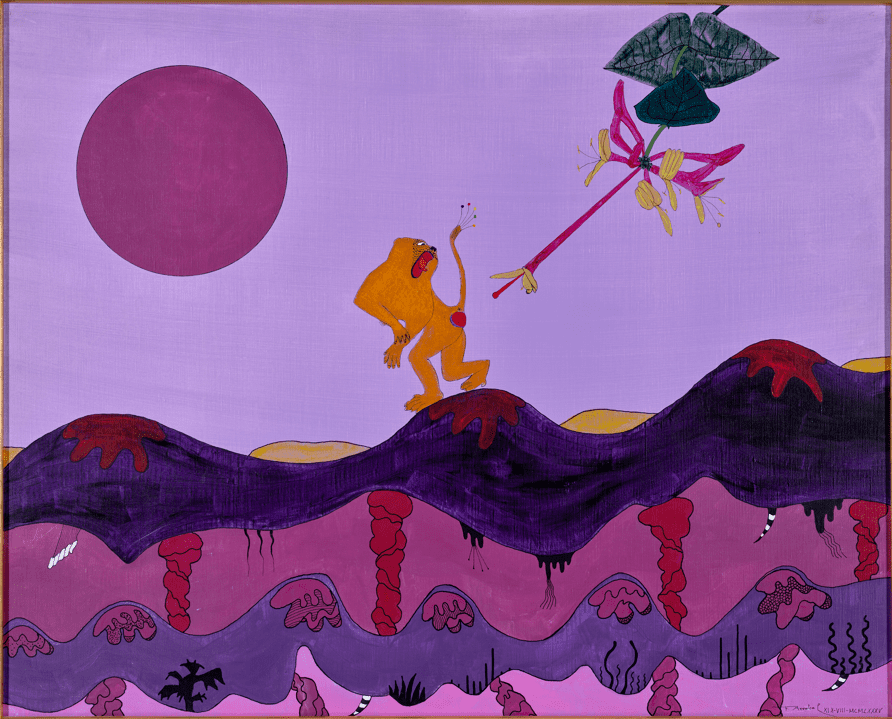
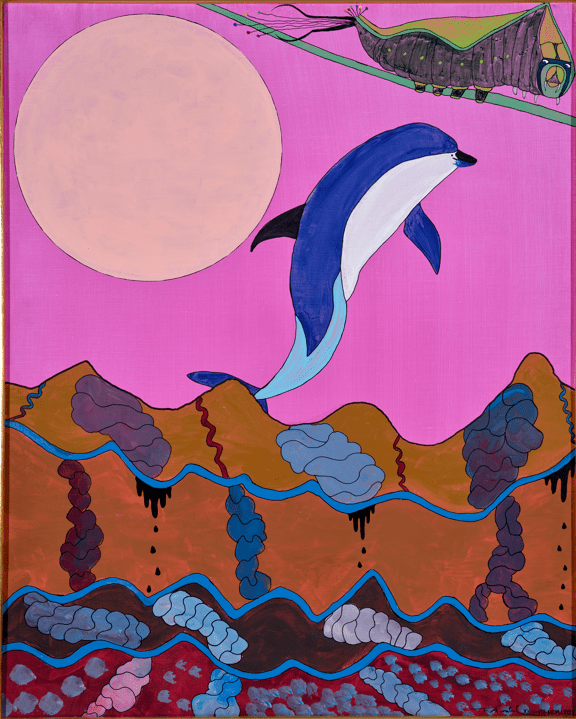
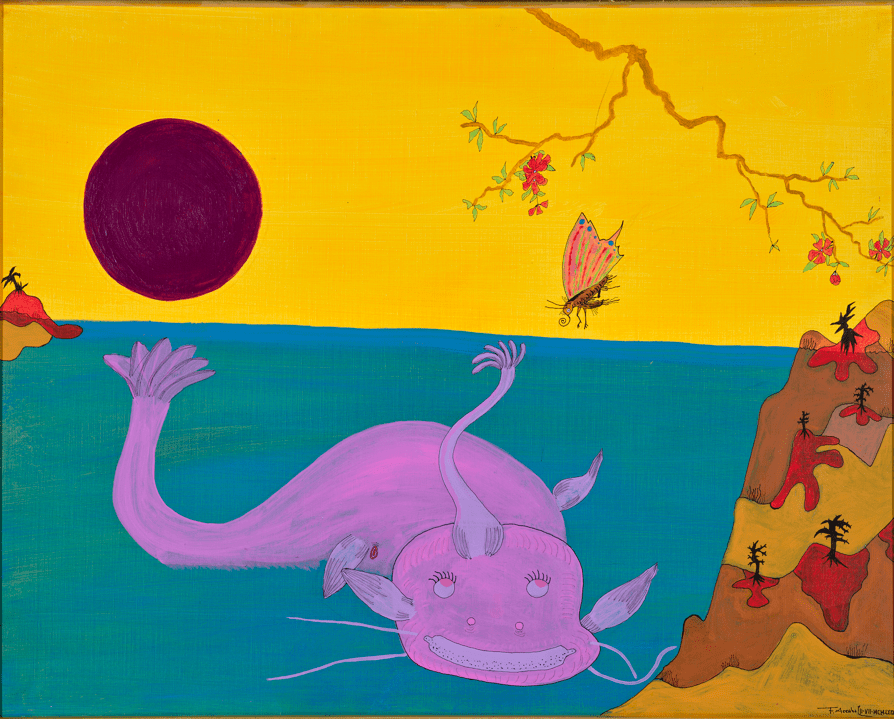
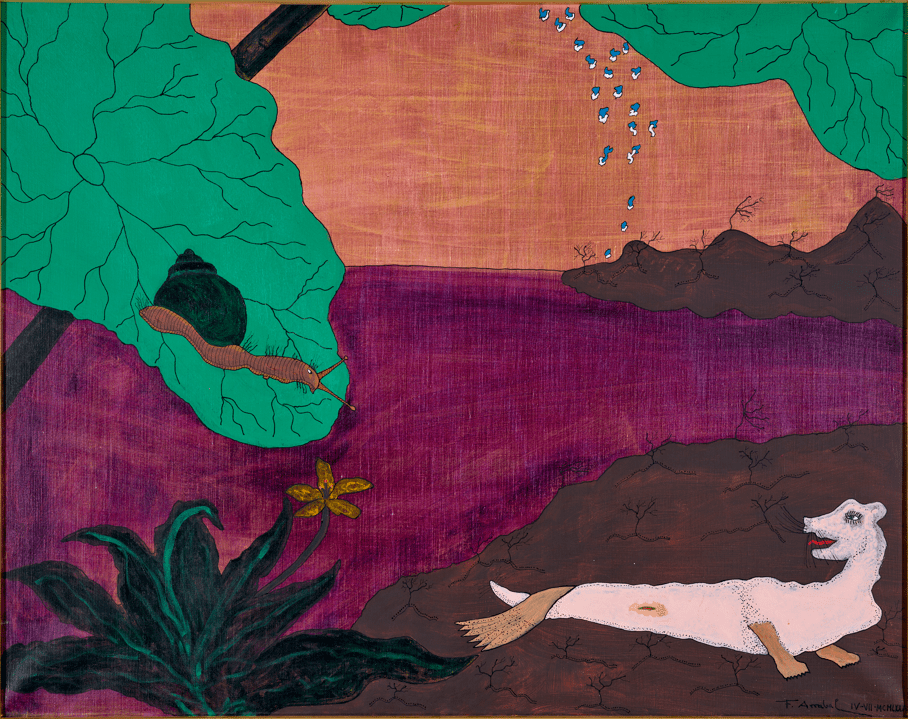
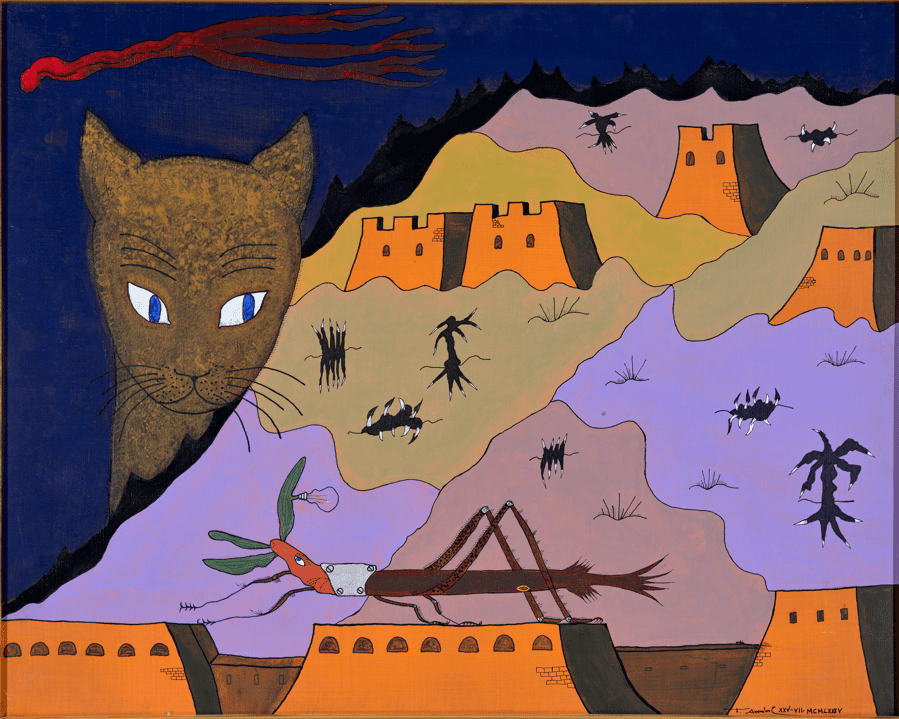
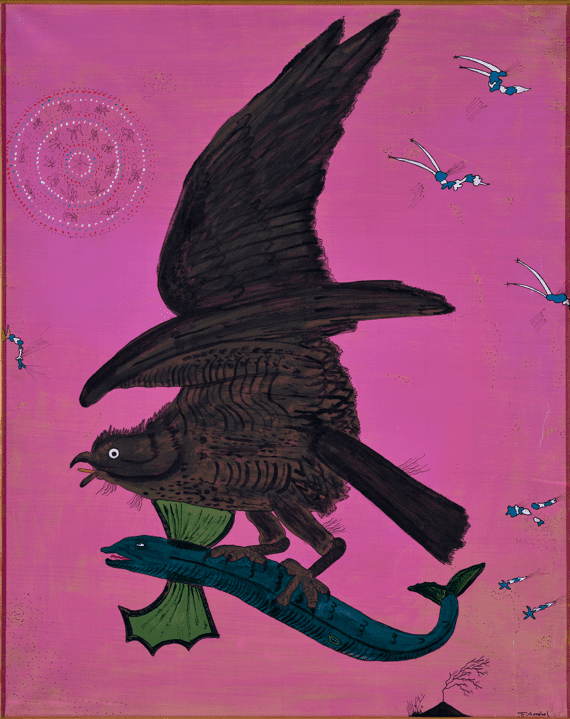
In this way, Cayon exhibits for the first time in Spain “Amores imposibles“, a series of paintings plagued with mystery in its purest humorous and personal sense. Together with “Historias universales“, his other great Achilles heel, it was made between January 1 and August 24, 1985 and, due to its success, it was immediately exhibited in a gallery in the Latin Quarter of Paris.
In “Amores imposibles“, Arrabal (through a preciousness in detail almost typical of codices) shows us painting as Yin and Yang as a symbol of unattainable possibilities and promises, an act of anguish and, at the same time, uneasiness, as a way of expressing an implicit song about irreducible ambiguity.
Arrabal seems to offer us the autarchic character of each of his works, their mute independence: neither the gaze, much less these words, will be able to close their possibilities of meaning, to grasp the work that is incorporated into the truth of what is the bearer of its own wandering.