Cayón is pleased to present, in Madrid, the first exhibition of Emilio Isgrò (Barcellona of Sicily, 1937) at the gallery. The exhibition is introduced by a text from Italian art critic and art historian Bruno Cora.
Conceptual artist and painter – but also poet, writer, playwright and director – Emilio Isgrò is one of the most internationally known names of Italian art of the XXth and XXIst century.
Starting in the 1960s, Isgrò created one of the most revolutionary works of the so-called second avant-garde. By erasing texts in the form of encyclopedias, manuscripts, books and maps, Isgrò puts the practice of Cancellatura (Erasure) at the center of all his research, as “it is not mere negation, but rather affirmation of new meanings: it is the transformation of a negative sign into a positive action”.
Over the years, Isgrò’s work has been at the centre of several anthological exhibitions, as well as national and international collective expositions: he also participated in four editions of the Venice Biennale (1972, 1978, 1986, 1993), while in 1977 he won the first prize at the 14th São Paulo Biennale.
Numerous works are present in renowned national institutions, including the Uffizi Gallery in Florence, the collections of the Quirinale and the National Gallery of Modern and Contemporary Art in Rome, the Bocconi University and the Museum of XXthe Century in Milan, the Mart in Rovereto, as well as international collections such as the Centre George Pompidou in Paris, the Musées Royaux des Beaux-Arts de Belgique in Brussels and the museums of Jerusalem and Tel Aviv.
Emilio Isgrò, 2023, (c) Lorenzo Palmieri, Courtesy Archivio Emilio Isgrò
At the Cayón Gallery of Madrid, Emilio Isgrò presents four new artworks in the sign of a resumption of contact with an important Mediterranean and European culture, inspired by the painter Francisco de Goya.
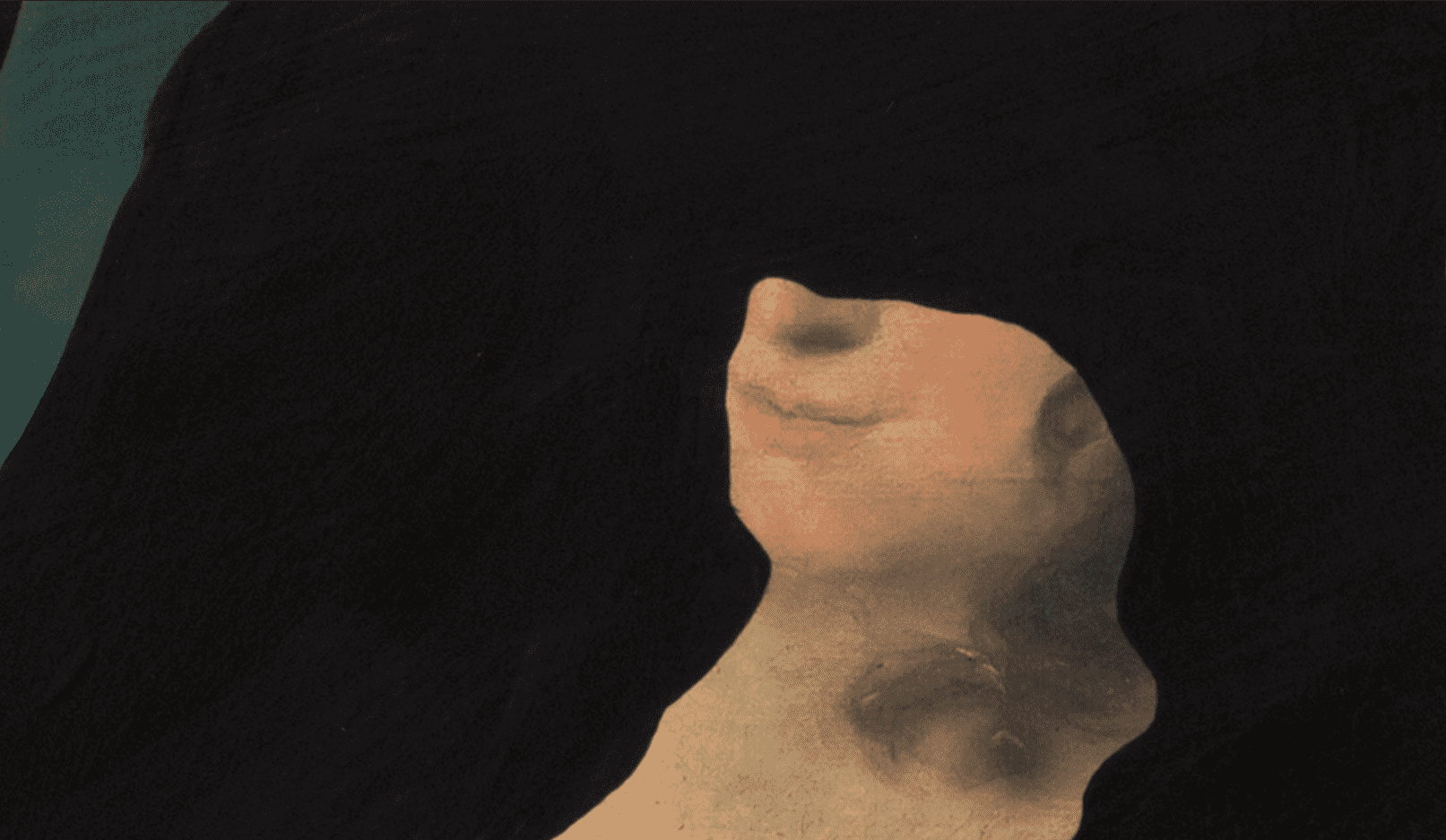
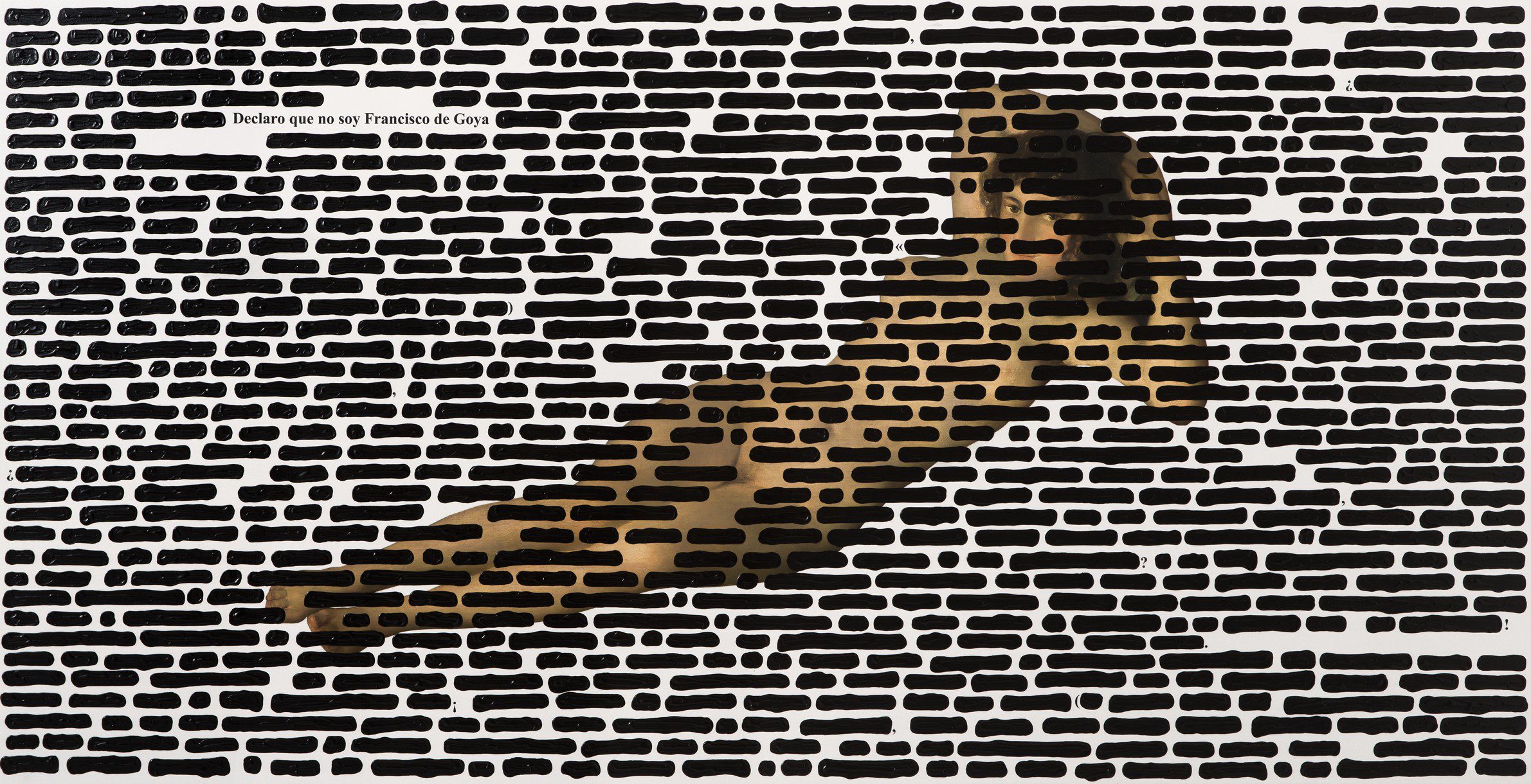
Detail of the painting Maja tachada negra.
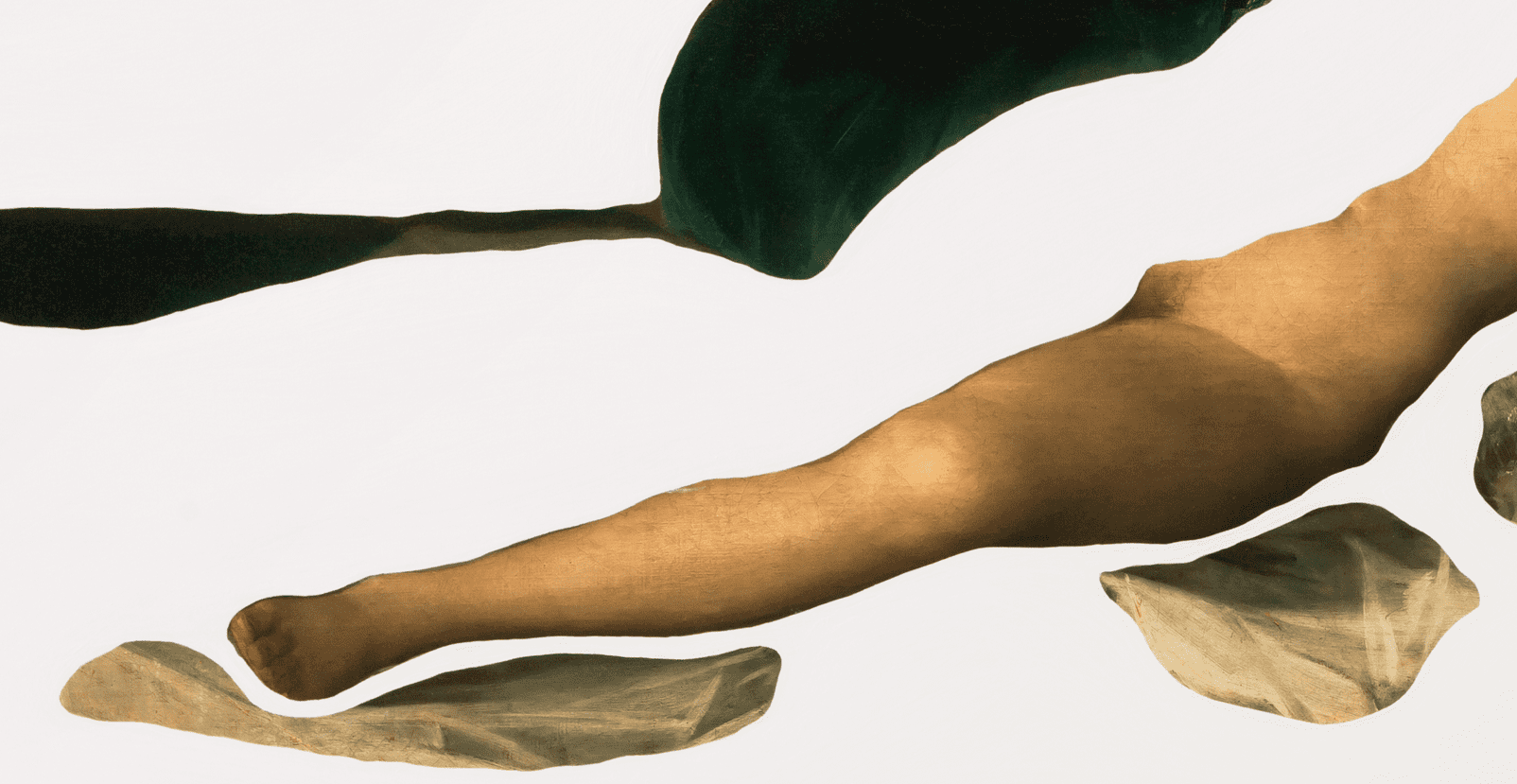
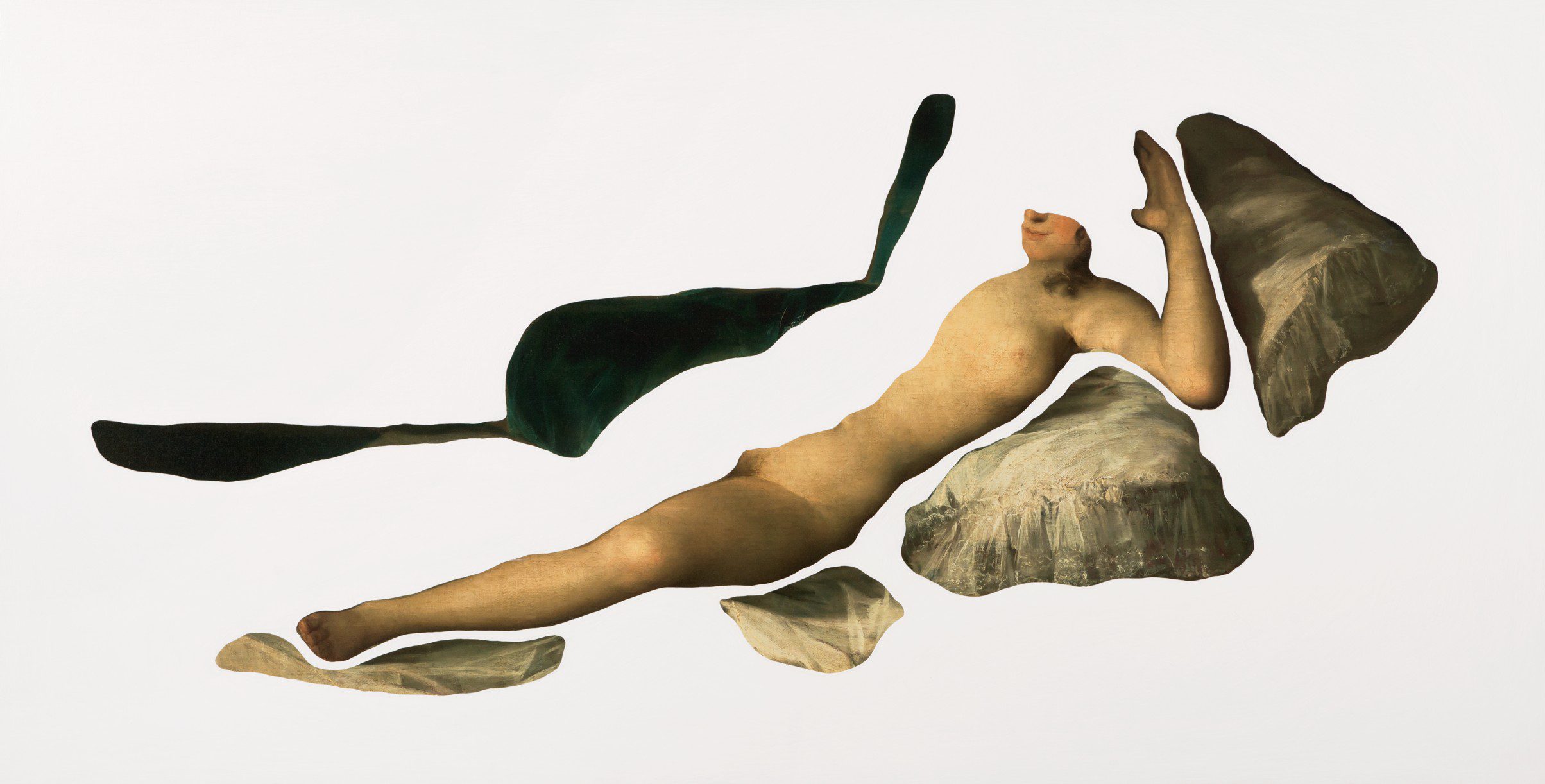
Three paintings reproduce the famous Maja desnuda preserved at the Prado Museum, in full-scale, on which Isgrò intervenes by erasing it in three versions: with the iconic black mark of erasure (La desnuda tachada) and through a drastic erasure in white (La maja tachada blanca) and in black (La maja tachada negra) of the woman’s image.
On the theme of identity, Isgrò has been working since the 1960s: even in these new works, Isgrò obliterates the Maja desnuda and its author with the typical erasory trait, superimposing the dense black or white texture, live or framed and in blocks, to historical iconography, to mask the general features by wisely modifying the background image and bringing out individual and selected details of the figure among the traits of the Cancellature (Erasures).[1]
[1] S. Pezzato, Isgrò e Malaparte identità negate, from the catalogue Emilio Isgrò. Maledetti toscani, benedetti italiani, Mimesis, Milan-Udine 2014
Detail of the painting Maja tachada blanca
The artist’s invitation is to reflect on the effect of the Cancellatura as a form of revelation, where the absence of an image reveals more than its presence can do.
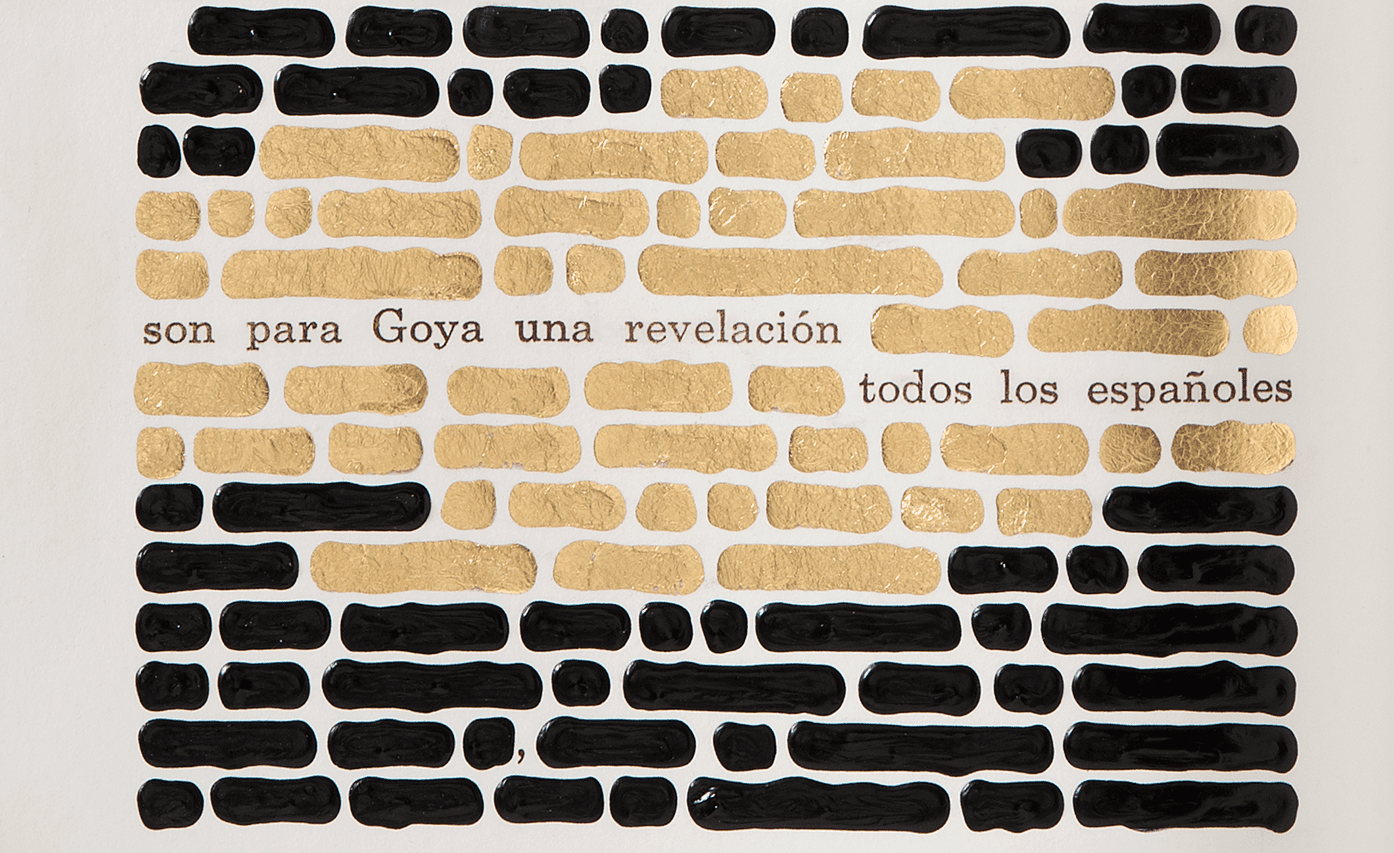
Detail of the artwork Ortega y Gasset, Goya
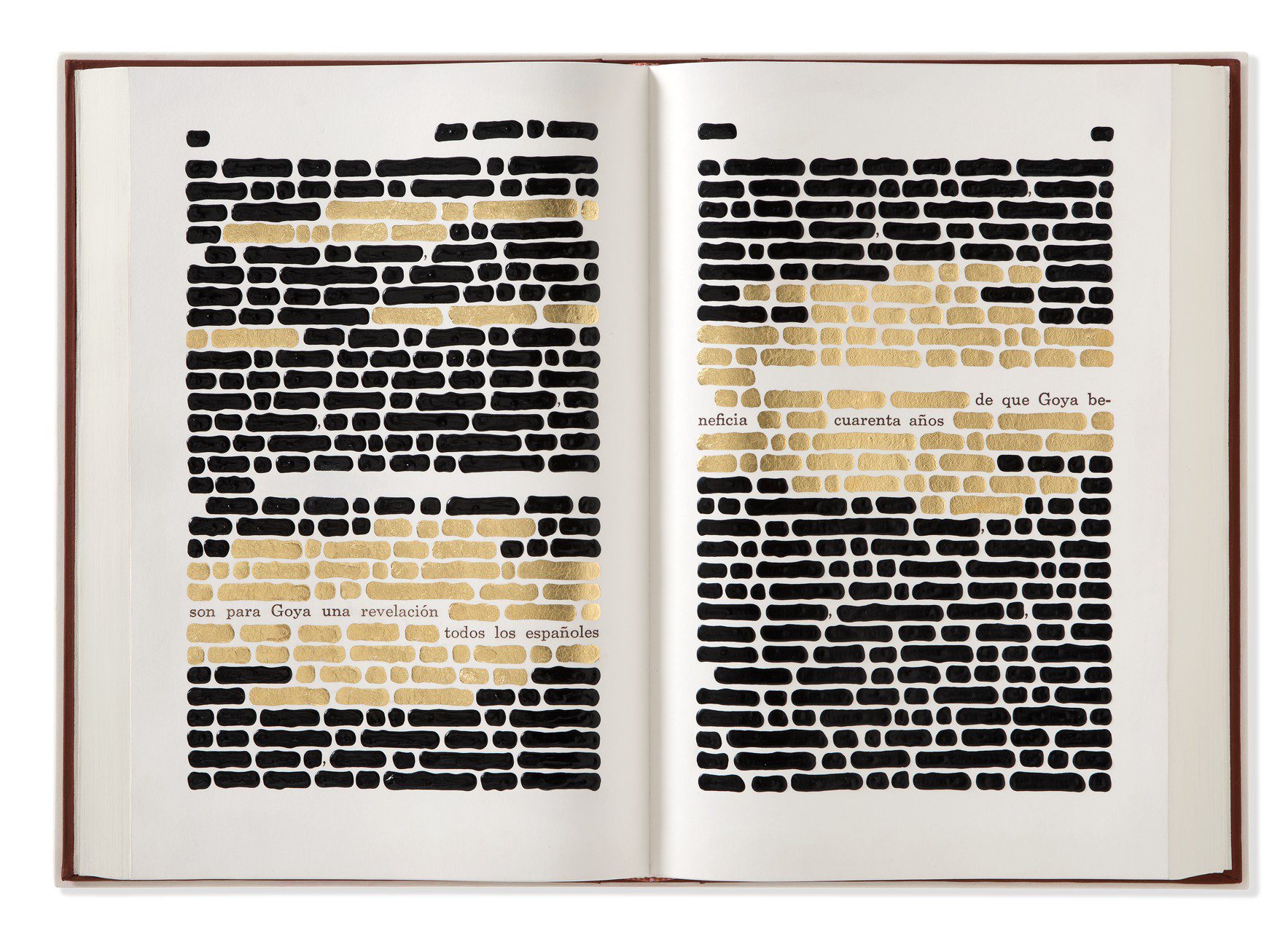
The fourth work, a biographical book on Francisco de Goya written by Ortega y Gasset, is erased by Isgrò in black and gold, a recent interpretation of the artist’s Cancellatura. Ortega y Gasset, Goya further enriches the reflection of Isgrò on a new encounter between Italian and Spanish cultures and artistic thinking, between contemporary visual language and historical tradition.